


Quick answer: To clean plantation shutters safely, dust louvres weekly with a dry microfibre cloth (top to bottom, louvres closed), and deep clean monthly using a barely damp cloth with mild soap solution. Dry immediately after. Avoid bleach, abrasive cleaners, steam cleaners, and soaking the slats—especially on wooden shutters.
Dust has a talent for reappearing the moment you’ve finished cleaning. Shutters know this better than most. One afternoon of bright sunlight and suddenly every slat is doing its best impression of a neglected bookshelf.
The good news? Cleaning plantation shutters is genuinely quick and straightforward once you know the right routine. We fit shutters across Essex (and beyond into Kent and London) and get asked about care all the time—so consider this our definitive guide. We’ll walk you through a fast weekly habit, a proper deep clean, and the maintenance checks that keep everything moving smoothly for years to come.
Why regular shutter care matters (and it’s not just about looks)
Clean shutters look great—that much is obvious. But there’s more to it than aesthetics.
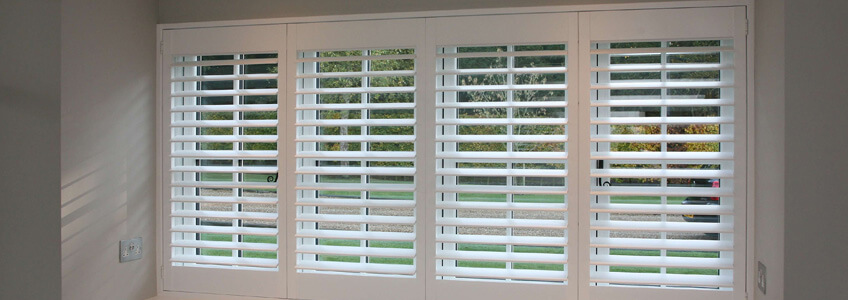
Dust accumulates on louvres surprisingly quickly, and for households with allergy sufferers, that build-up can affect air quality in the room. Keeping on top of it makes a real difference. Beyond that, dust and grime can work their way into tilt mechanisms and hinges over time, making louvres stiffer and harder to operate. Catching it early is far easier than fixing it later.
In kitchens and bathrooms, the stakes are a little higher. Grease residue and condensation create the ideal conditions for dullness, mould, and paint deterioration if shutters aren’t wiped down regularly. The finishes on well-made shutters—including the durable painted and stained finishes we use on our bespoke, made-to-measure ranges—are built to last, but no finish benefits from being left to fend for itself.
What you’ll need (keep it simple)
There’s no specialist equipment required here. Most of what you need is probably already in your cleaning cupboard.
Use these:
- Two microfibre cloths (one dry, one barely damp)
- A soft brush, feather duster, or vacuum cleaner with a brush attachment
- A mild soap solution (a small drop of washing-up liquid in lukewarm water is ideal)
- Cotton buds or a soft toothbrush for corners and crevices (optional but handy)
- An old towel to protect your window sill or floor
Avoid these:
- Bleach, cream cleaners, or abrasive scouring pads
- Soaking your cloth before use—it should barely be damp, not wet
- Steam cleaners (the heat and moisture can damage painted finishes and warp wooden slats)
- Harsh degreasers, especially on painted surfaces
- Silicone-based sprays, which can leave a residue that attracts more dust
Cleaning plantation shutters: your quick weekly routine
A few minutes once a week is all it takes to keep on top of things. The key is getting your technique right from the start.

Start by closing the louvres so they’re all angled in one direction—this gives you a flat surface to work across efficiently. Using your dry microfibre cloth or soft duster, work from the top of the shutter panel down to the bottom. This way, any dust you dislodge falls onto slats you haven’t cleaned yet, rather than ones you already have.
Once you’ve done one side, tilt the louvres 180 degrees and repeat on the other. A vacuum cleaner with a soft brush attachment works brilliantly here too, particularly if you’ve got pets.
If you spot a small mark or smudge, address it now with a barely damp cloth. Here’s something worth knowing: if you go straight in with a wet cloth on dusty shutters, you’re essentially making dust paste—and that’s much harder to shift than dry dust. Always dry-dust first.
How to deep clean plantation shutters (monthly or seasonal)
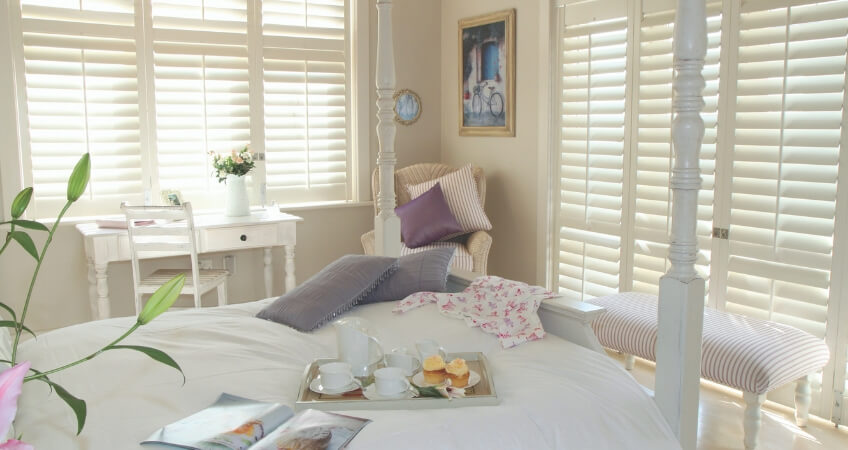
Every month or so—or whenever they’re looking a bit worse for wear—your shutters will benefit from a more thorough clean. This is especially true in kitchens, bathrooms, and rooms that get a lot of direct sunlight.
Here’s how to do it properly:
- Prep the area. Lay a towel along the window sill to catch any drips. Open the shutter panels so you’ve got full access.
- Vacuum first. Use the brush attachment to lift surface dust from each louvre before introducing any moisture.
- Wipe with your damp cloth. Mix a small amount of mild washing-up liquid into lukewarm water. Dip your microfibre cloth in, then wring it out thoroughly—it should feel barely damp, not wet. Wipe each louvre individually, working top to bottom.
- Clean the frames, tilt rod, and edges. These are easy to overlook, but they accumulate dust and grime just as readily as the slats.
- Dry immediately. Follow each damp wipe with a dry cloth. Don’t leave any moisture sitting on the surface.
Be gentle around hinges, tilt mechanisms, and any magnetic catches—these moving parts don’t need cleaning solutions; a dry cloth or soft brush is sufficient. If you’d like personalised advice for your specific shutter finish, feel free to get in touch with us—we’re always happy to help.
Room-by-room tips (because kitchens and bathrooms play by different rules)
Kitchen shutters
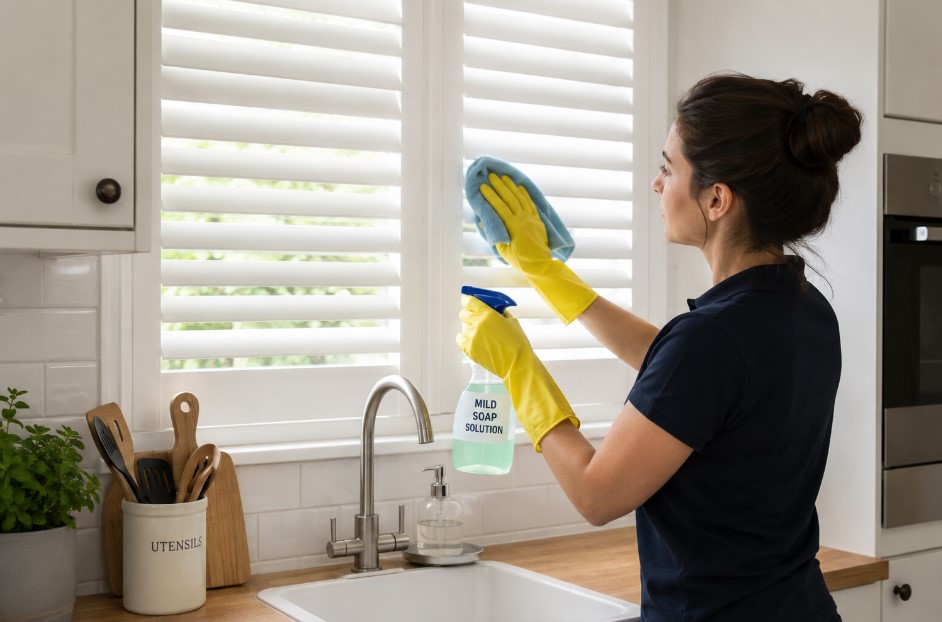
Kitchen shutters are exposed to airborne grease and cooking residue, which settles on surfaces and creates a sticky film over time. Near the hob especially, this can build up fast.
Use your mild soap solution here, but keep moisture to an absolute minimum—especially if your shutters are painted. Apply the solution to your cloth first (never spray directly onto the shutters), wipe the louvres, and buff dry immediately. In busy kitchens, you’ll probably find a fortnightly clean works better than a monthly one.
Bathroom shutters
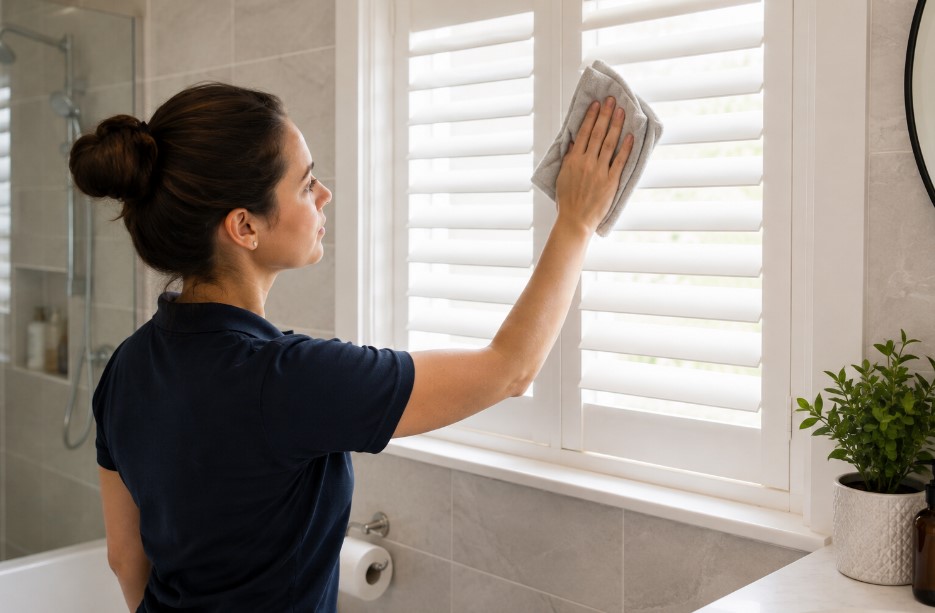
Bathrooms bring humidity and condensation into the mix. After a hot shower, moisture lingers in the air and can settle on your shutters—over time, this dulls the finish or encourages mould growth if left unaddressed.
The fix is simple: give them a quick wipe with a dry cloth after particularly steamy showers, and make sure the room is well ventilated. A mix of equal parts white vinegar and water is useful for tackling any early mould or mildew spots—apply with a soft cloth, then rinse with a clean damp cloth and dry straight away.
Bedrooms and living areas

These rooms are gentler on shutters, but dust and allergens still accumulate. A weekly run with a vacuum’s brush attachment is particularly effective here, as it removes particles rather than just redistributing them. Keep it quick, keep it consistent, and you’ll rarely need to do more than this.
Maintenance checks that keep shutters working smoothly
Cleaning and maintenance aren’t quite the same thing, and it’s worth doing a quick check every few months.
- Louvres feeling stiff? Don’t force them. A little resistance usually means dust in the mechanism—try gentle cleaning first. If that doesn’t sort it, it’s worth getting someone to take a look.
- Loose hinge screws? These can be gently tightened, but don’t over-tighten. Screws that are overtightened can strip the wood or cause frames to crack.
- Tracks and channels (if applicable): Keep these free from dust and debris to ensure smooth operation.
- Chips and scratches: Spot these early and they’re easily addressed. Left too long, small chips can compromise the finish more broadly.
If something feels off with the way your shutters are operating, we’d always rather you asked us than wrestled with it yourself. Our team can advise over the phone—no obligation, no fuss.
Common mistakes we see (and how to avoid them)
A quick list of the things that cause the most damage—usually with the best of intentions:
- Using too much water. Wooden shutters can warp. Painted finishes can blister. Always wring your cloth out well.
- Spraying cleaner directly onto the shutters. Always apply to the cloth first. Direct spraying forces liquid into hinges and mechanisms where it really doesn’t belong.
- Over-tightening screws. More force isn’t always more fix.
- Ignoring stiff louvres. A small issue left unaddressed has a way of becoming a larger one. Don’t wait.
- Using furniture polish or wax. Unless your shutter manufacturer specifically recommends it, avoid polish—it can attract dust and leave a residue that’s hard to shift.
When it’s time to call in the pros
Sometimes, no amount of careful cleaning will fix what’s actually a mechanical or structural issue. Here’s when it’s worth picking up the phone:
- Louvres that remain stiff or misaligned after cleaning
- Visible damage to slats, frames, or tilt rods
- Finish issues around trims and window nosing
- You’re thinking about a refresh—new colour, new style, or shutters in additional rooms
We’re a small, independent family-run business based in Chelmsford, and we cover Essex, as well as areas across Kent and London. All our installers are fully trained carpenters who work directly for us—we don’t use subcontractors—so when we say we’ll take care of it properly, we mean it.
If you’re curious about colour matching (including popular Farrow & Ball shades), replacement options, or just want to explore what’s available, you’re welcome to visit our showroom in South Woodham Ferrers (open Monday, Wednesday, and Friday, 9am–3pm). There’s no pressure—just plenty of real shutters to look at in a proper home environment.
Frequently asked questions about cleaning plantation shutters
What’s the best thing for cleaning plantation shutters without damaging the finish?
A dry microfibre cloth for regular dusting, and a barely damp cloth with a mild soap solution (washing-up liquid in lukewarm water) for deeper cleaning. Always dry immediately. Avoid anything abrasive, bleach-based, or silicone-based.
Can I use vinegar on plantation shutters?
Diluted white vinegar (one part vinegar to four parts water) is useful for tackling mould, mildew, or stubborn marks, particularly in bathrooms. Apply to a cloth first, wipe, then rinse with a clean damp cloth and dry thoroughly. Don’t use it neat, and avoid it on painted finishes where possible.
How often should I clean plantation shutters?
Weekly dusting is ideal for most rooms. A deeper clean is worth doing monthly, or more frequently in kitchens and bathrooms where grease and condensation build up faster.
What should I do if my louvres are stiff or won’t tilt properly?
Try a gentle clean first—dust in the mechanism is often the culprit. If stiffness persists, don’t force them. Get in touch with us and we can advise—it may be a simple adjustment that one of our installers can sort quickly.
Are faux wood shutters cleaned differently from wooden shutters?
The method is similar, but faux wood and polymer shutters are more tolerant of moisture. You can be slightly less cautious with dampness—though you should still avoid soaking them. Real wood shutters need extra care: dry them thoroughly and avoid excess water at all times to prevent warping.
Can I use a steam cleaner on plantation shutters?
We’d recommend against it. The combination of heat and moisture can damage painted finishes and cause wooden slats to warp over time. A damp microfibre cloth and mild soap solution is safer and just as effective.
How do I remove greasy marks on kitchen shutters?
A mild dish soap and lukewarm water solution works well. Apply to a cloth (not directly to the shutter), wipe the affected area, and buff dry immediately. For stubborn grease near a hob, a slightly stronger soap concentration helps—but always rinse and dry afterwards.
Do you offer repairs or adjustments if my shutters aren’t sitting right?
Yes. If you’ve noticed your shutters aren’t operating as smoothly as they used to, or something doesn’t look quite right with the fit, we’d love to hear from you. We offer a free, no-obligation design/survey appointment, and our team can advise on repairs, adjustments, or anything else you need.
We’re here when you need us
We hope this guide has given you everything you need to keep your shutters looking brilliant for years to come. A little routine care goes a long way, and most of it takes just a few minutes a week.
If you’ve got questions about your shutters, want a hand with a tricky issue, or you’re thinking about adding plantation shutters to another room in your home, we’d love to hear from you. We’re a Chelmsford-based, family-run team covering Essex, Kent, and London—and we offer a free, no-obligation design/survey appointment with no pressure attached.