
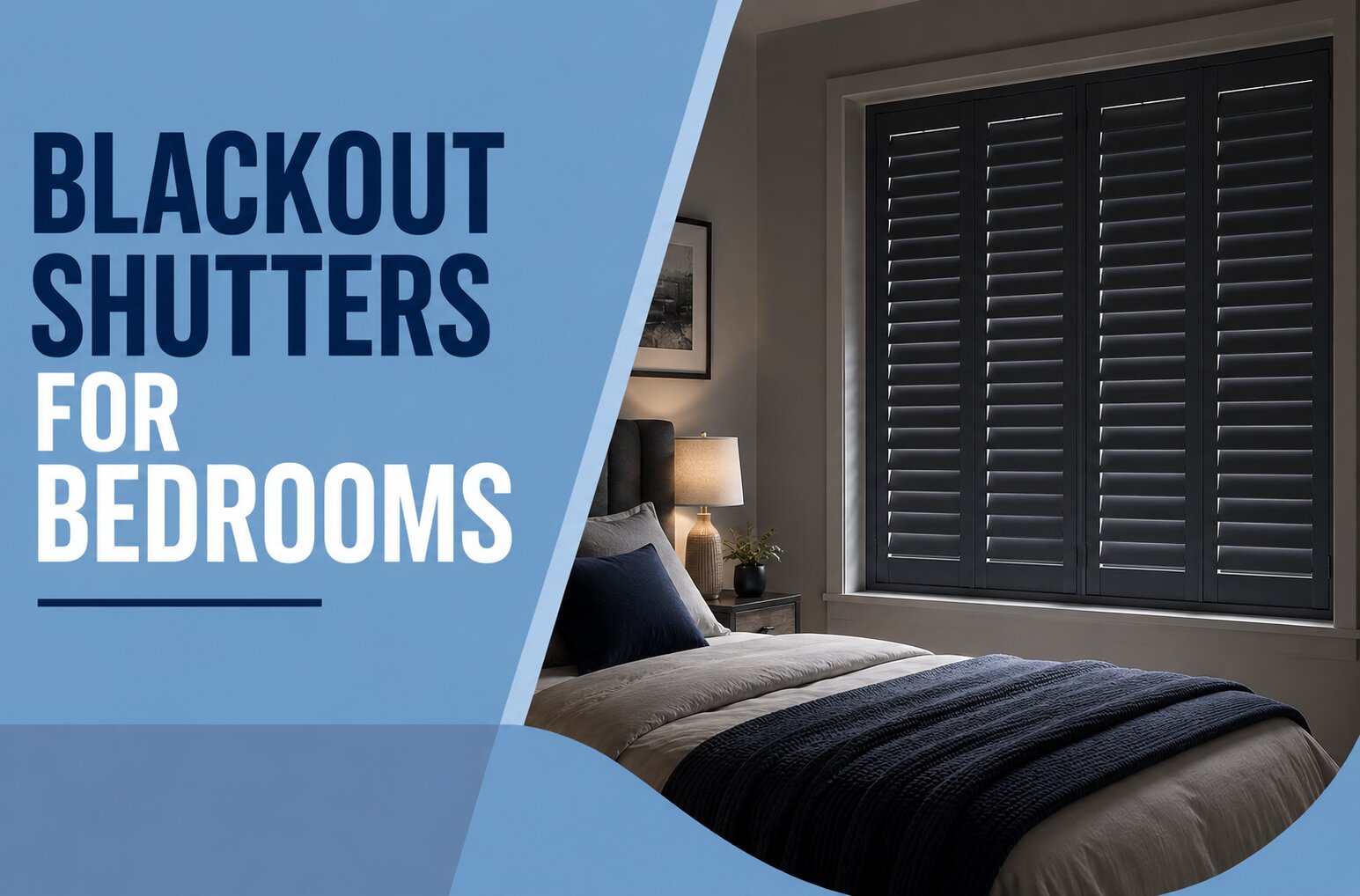

Blackout shutters for bedrooms are highly effective at reducing light, but true “total blackout” depends on fit quality, frame type, and installation precision. When made to measure and professionally fitted, bedroom shutters outperform most curtains and blinds for light control, noise reduction, and summer heat management.
Anyone who’s tried sleeping through a British summer will know the particular frustration of lying wide awake at 5am while the bedroom glows like the inside of a lightbulb. The sun’s up, the birds are going for it, and whatever you’ve got hanging in your window simply isn’t doing enough.
It’s a problem that catches people out every year. You spend months assuming your curtains are fine—and then June arrives and suddenly they’re not. Blackout shutters for bedrooms have become one of the most searched-for home improvement solutions in the UK for exactly this reason, yet there’s still a lot of confusion about how they actually perform, whether they make rooms hotter, and whether they’re genuinely worth the investment.
This guide cuts through all of that. We’ll explain what blackout shutters can and can’t do, what affects their performance, how they compare to curtains and blinds, and what to look for when choosing a solution that suits your bedroom, your windows, and your budget.
Why bedrooms feel brighter in summer (and why it ruins sleep)
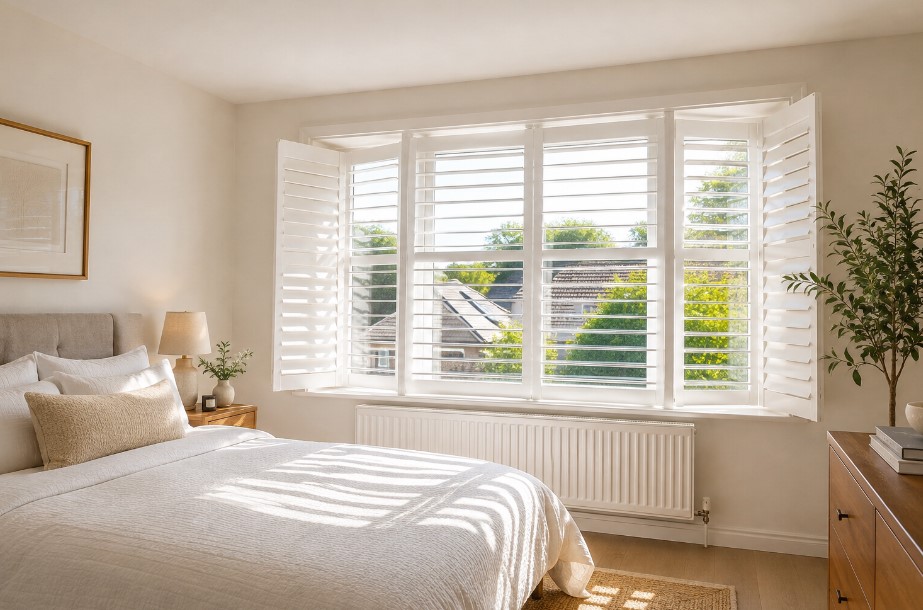
The UK’s latitude means sunrise in June and July can fall as early as 4:30am. That’s well before any reasonable alarm, and for light sleepers—or children with no concept of what constitutes a civilised morning—it’s a genuine problem.
Longer daylight hours aren’t the only culprit either. The sun sits at a higher angle in summer, pushing light deeper into rooms that cope perfectly well in winter. Add in reflective surfaces outside—paving, car bonnets, conservatory roofs—and you’ve got a lot more light bouncing around than you’d expect.
Sleep science is fairly clear on this: light suppresses melatonin production, which is the hormone that helps your body recognise it’s time to sleep. Even low levels of light can delay sleep onset and reduce overall sleep quality. For shift workers, new parents, babies, and young children, the impact is especially pronounced.
Do blackout shutters work?
Yes—but with an important caveat. Shutters are highly effective at reducing bedroom light. When louvres are fully closed, they block the vast majority of direct sunlight and streetlight from entering the room. For most people, that’s more than sufficient for a good night’s sleep.
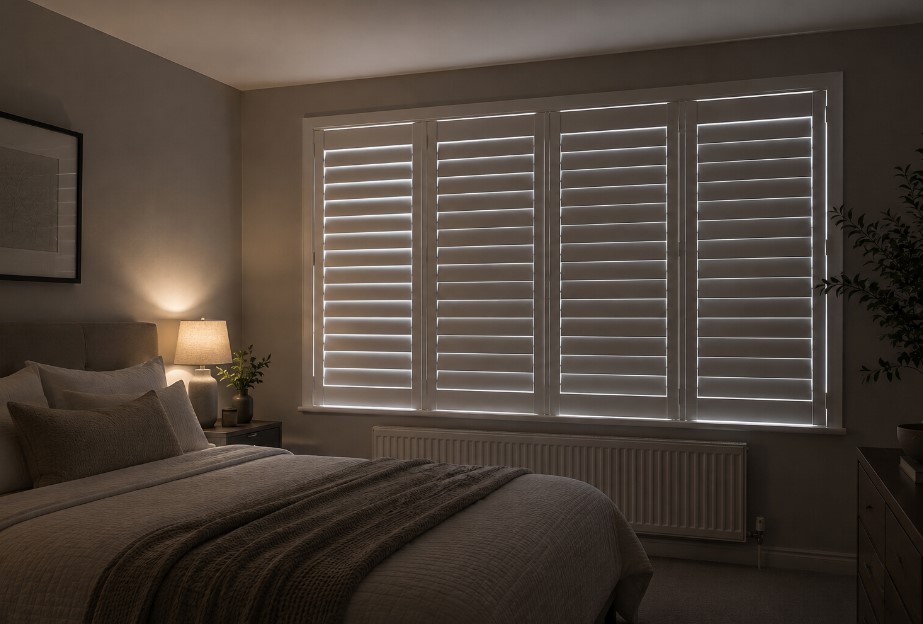
The word “blackout” can create unrealistic expectations, though. Complete, zero-light darkness depends on several factors:
- Fit quality — small gaps between the shutter frame and the window reveal are the most common source of light leakage. Made-to-measure shutters, professionally surveyed and fitted, minimise this significantly
- Frame style — how the frame is constructed and how tightly it sits against your window architecture makes a real difference, especially on older properties with uneven reveals
- Louvre size — larger louvres mean fewer gaps between slats, which reduces the amount of light that filters through when they’re closed
- Window type — sash windows, bay windows, and skylights all present different fitting challenges; a professional survey helps identify the best approach before you commit
The honest answer: most homeowners find plantation shutters sufficiently dark for sleep. Those with genuine light sensitivity, young babies, or bedrooms that cop direct early morning sun may want to consider pairing shutters with an integrated room-darkening blind for maximum effect.
What makes a shutter ‘blackout’ in practice?
Not all shutter styles perform equally in a bedroom. If darkness is your priority, here’s what matters:
- Full height shutters are the best choice for bedrooms—they cover the entire window from top to bottom, giving you complete control with no gaps left by a lower-only panel
- Café style shutters are better suited to living rooms or kitchens where privacy matters more than light blocking; they only cover the bottom portion of a window
- Frame design — a tight, custom-fitted frame that accounts for the shape and condition of your window reveal is the single biggest factor in reducing light bleed
- Solid panel shutters are worth considering if maximum darkness is your priority; with no louvres at all, they allow the least light seepage of any shutter style
A quick practical checklist: for the darkest possible bedroom, choose full height shutters with a close-fitting frame, larger louvres, and professional installation from someone who knows how to compensate for wall imperfections.
Blackout shutters for bedrooms vs blackout curtains and blinds: which offers better light control?
It’s worth being honest here—curtains and blinds can work well, and they’re not automatically inferior. But they do have some common limitations:
Curtains, even blackout-rated ones, tend to leak light around the top and sides unless they’re paired with a fitted pelmet and returns. They can also fade, collect dust, and let in a draught at the edges. Over a few years, the fabric softens and loses its opacity.
Roller blackout blinds offer solid light control and are popular for a reason, but they can leave a gap at the top or sides depending on how they’re mounted—and they’re more susceptible to warping or losing tension over time.
Plantation shutters block light from the window surface itself rather than hanging loosely over it. They’re rigid, fixed to the frame, and don’t shift in a draught. They’re also significantly easier to maintain—a wipe-down with a damp cloth is all they need, rather than being unhooked and washed every few months.
They do cost more upfront. But they’re a permanent fixture that adds to the look and value of your home. We always recommend whichever option genuinely suits the window and the budget—and sometimes that means a quality blind is the right call. A free survey is the best way to work out what’s going to perform best in your specific room.
Are blackout shutters good for the summer?
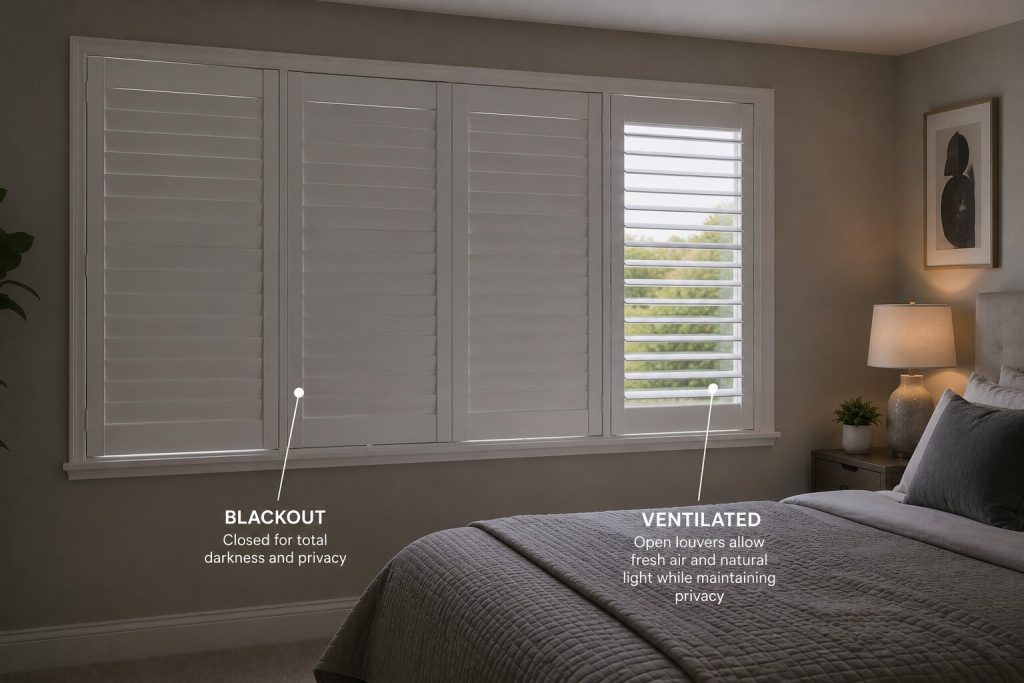
Yes, and often better than people expect. Shutters are particularly well-suited to summer bedrooms because they offer something curtains and most blinds don’t: ventilated light control.
You can tilt the louvres to let airflow in while still keeping light levels low and maintaining privacy. That’s especially useful on warm nights when you want the window open but don’t want streetlights flooding the room. A honeycomb blind integrated within the shutters also provides superior insulation qualities and better room darkening.
Beyond that, shutters also offer UV protection. Closing them during the hottest part of the afternoon shields furniture, flooring, and bedding from sun bleaching. And since they block harsh glare rather than eliminating all light, you can adjust them throughout the day to suit conditions.
Do blackout shutters make the room hot?
This is one of the most common concerns, and the short answer is: no, they don’t. In fact, closing shutters during peak sun hours actually reduces solar heat gain—they prevent sunlight from warming the air inside the room the way unshielded glass does. Solid wood or MDF panels also help block heat passing through the window area.
The confusion often arises when people close shutters and windows simultaneously on a hot day, then blame the shutters for a stuffy room. The culprits there are a lack of airflow and the ambient summer heat—not the shutters themselves.
A smarter approach for summer:
- Close shutters during peak sun (typically 10am–4pm) to block heat from building up
- Tilt louvres slightly to allow airflow without letting in direct glare
- Open everything—windows and shutters—in the evening once outside temperatures drop to flush heat out of the room
Used properly, shutters are a genuinely effective passive cooling tool. They can also improve energy efficiency by lowering energy bills, preventing heat loss in colder months as well as reducing heat gain in summer.
Are blackout shutters worth it?
For most homeowners, yes—particularly when you factor in durability, the fact that well-made blackout shutters can last for decades, and the long-term comparison with curtains or blinds that need replacing every few years.
They’re especially worth considering if:
- You have young children or babies with early wake-up times
- Someone in the household works shifts and needs to sleep during daylight hours
- Your bedroom faces east or directly onto a street
- You’ve tried blackout curtains and still get light bleeding in around the edges
- You want a permanent, low-maintenance window solution that adds value to the property
- You’re renovating and want everything to look purposeful and built-in
The investment feels very different when you stop thinking of shutters as a window dressing and start thinking of them as a structural improvement—they’re a great choice for homeowners prioritising sleep, durability, and aesthetics.
Choosing the right bedroom blackout shutters and window coverings: what UK homeowners need to know
Every bedroom presents slightly different challenges. A street-facing Victorian bay window behaves completely differently to a modern loft bedroom with a Velux or a north-facing nursery.
Bay windows need shutters that turn corners neatly without creating light gaps at the panels’ edges. Nurseries benefit from solid, full height coverage with minimal hardware that could interest curious hands. Street-facing rooms might prioritise a combination of darkness and acoustic dampening. Awkward or non-standard window shapes—arched tops, narrow sashes, wide picture windows—need a made-to-measure approach from the start.
This is why a proper survey matters. Getting the measurements slightly wrong, or choosing the wrong frame style for an older window reveal, can undermine the performance of even good-quality shutters. We visit at a time that suits you, measure everything accurately, talk through your options, and give you an honest quote with no hidden extras. When choosing shutters, we explain the materials available across our range, including hardwood and composite options. Hardwood is popular for its durability, while MDF is a cost-effective option for standard bedroom shutters, and faux wood is better for damp environments because of its moisture resistance. Shutters are also available in classic whites and custom colors to complement your bedroom style.
Frequently asked questions
Do blackout shutters work better than blackout curtains?
For most bedrooms, yes. Shutters are fixed to the window frame rather than hanging in front of it, which significantly reduces light bleed at the edges. They’re also more durable, easier to clean, and don’t sag or fade over time. Blackout curtains can work well, but they typically need a fitted pelmet and good side returns to compete.
Are blackout shutters worth it for a child’s bedroom or nursery?
Very much so. Young children are particularly sensitive to light disrupting their sleep routines, and a dark room at 5am can be the difference between everyone sleeping until 7am and a very long day. Full height shutters with a close-fitting frame are the most effective option for nurseries, and unlike blinds, they have no cords or chains—which matters for safety.
Do blackout shutters make the room hot in summer?
No—quite the opposite, if used correctly. Closing shutters during peak sun hours blocks solar heat gain through the glass. The key is to tilt the louvres slightly for airflow rather than sealing everything shut, and to open windows and shutters in the evening once the outside temperature drops.
Are blackout shutters good for the summer if my room faces south or east?
Yes, and they’re particularly beneficial in these orientations. A south or east-facing bedroom gets direct sun from early morning, so the combination of strong early light and heat build-up is exactly what shutters are designed to manage. Tilting the louvres lets you get ventilation without the full glare.
Will there be any light gaps around shutters?
A small amount of light seepage around the frame edges can occur with any window treatment, but with made-to-measure shutters professionally fitted to your exact window dimensions, this is minimised considerably. Getting accurate measurements and using the right frame style for your window type makes a significant difference.
What’s the best shutter style for a bedroom: full height or café style?
Full height shutters are the clear winner for bedrooms. They cover the entire window, giving you complete light control from floor to ceiling. Café style shutters only cover the lower half of a window, which works well for kitchens or living rooms facing a street, but leaves the top of the bedroom window completely unshielded.
Can you get bedroom blackout shutters across the UK, and what should I look for locally?
Blackout shutters are available across the UK, but quality and fit vary considerably between suppliers. Look for a company that offers a proper in-home survey, made-to-measure manufacturing, and their own fitting team. We’re based in Chelmsford and cover all areas across Essex, as well as parts of Kent and London.
How do I clean bedroom shutters?
A quick wipe with a slightly damp microfibre cloth along each louvre is all it takes. Unlike curtains, there’s no washing, rehooking, or ironing involved—which is one of the less obvious but genuinely appreciated perks of shutters in a bedroom.
Can shutters help with privacy as well as blackout?
Absolutely. One of the main advantages of adjustable louvres is that you can tilt them to see out while preventing anyone from seeing in—even during the day with the lights on inside. It’s a level of flexibility that curtains simply can’t match.
Do I need a professional survey before ordering blackout shutters?
Yes, and it’s worth insisting on one. Window reveals can be uneven, particularly in older properties, and inaccurate measurements lead to light gaps and poor fit. A proper survey also helps you choose the right frame style for your specific window—something that’s hard to get right from photos or DIY measurements alone.
Book your free design survey with Lifestyle Shutters and Blinds
We’re a small, independent family-run business based in Chelmsford, and we cover all areas across Essex—as well as parts of Kent and London. Every set of shutters we install is made to measure and fitted by our own fully trained team; we never use subcontracted fitters.
If you’d like to find out whether blackout shutters are the right solution for your bedroom—and what that would look like in practice—we’d love to come and take a look. Our free, no-obligation design/survey appointment is exactly that: no pressure, just good advice and an accurate quote.